Understanding Administrative Subpoenas: Key Insights and Legal Perspectives

Administrative subpoenas are crucial tools in the realm of legal investigations, especially concerning criminal cases. They allow authorities to gather necessary documents and testimonies without requiring a warrant, providing efficiency in the investigative process. Understanding the nuances of these subpoenas is essential for anyone working in law enforcement, legal practice, or even in related fields where compliance and oversight are paramount.

This blog will explore several significant texts that delve into legislative insights and analysis surrounding administrative subpoenas. Whether you’re a student of law, a practicing attorney, or just someone interested in legal matters, these resources will give you a clearer understanding of the rights, processes, and implications of using administrative subpoenas in criminal investigations.

Administrative Subpoenas in Criminal Investigations: A Sketch

This concise book provides an excellent overview of the role of administrative subpoenas in criminal investigations. It sketches the legal framework and outlines the practical applications in real-world scenarios, making it an essential read for law students and practitioners. The author skillfully breaks down complex legal language, allowing readers to grasp the substance and significant implications of these subpoenas in an accessible format. If you’re looking to gain a foundational understanding of how administrative subpoenas operate within the legal system, this book is a great starting point.

Administrative Subpoenas in Criminal Investigations: A Brief Legal Analysis

This brief legal analysis serves as a crucial resource for anyone needing to understand the legal theories surrounding administrative subpoenas. The book meticulously examines the historical context and legislative background that shapes the current practices of issuing subpoenas within criminal investigations. The insights provided here are particularly beneficial for legal scholars and practitioners who require a robust reference to navigate the intricacies associated with administrative subpoenas. It highlights key cases and judicial interpretations, making it a handy handbook for effectively applying these principles in practice.

Crs Report for Congress: Administrative Subpoenas in Criminal Investigations: A Brief Legal Analysis: March 17, 2006 – Rl33321
This Congressional Research Service report offers an in-depth yet accessible look at administrative subpoenas, specifically from a legislative standpoint. It summarizes critical updates and analyses that reflect changes in law and practice over time. Perfect for policymakers, this report outlines the implications of administrative subpoenas on personal privacy and due process. The author skillfully balances detailed legal information with a pragmatic approach to the legislation’s impact on law enforcement and individual rights. A must-read for anyone in legislative roles or interested in the intersection of law and policy.

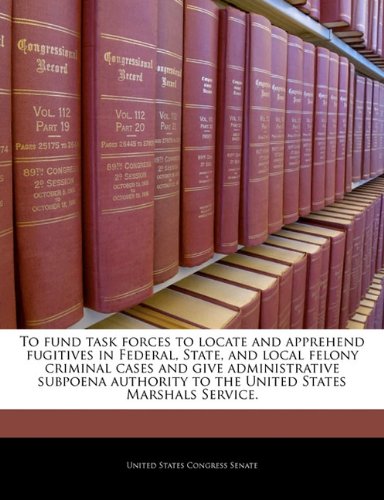
To fund task forces to locate and apprehend fugitives in Federal, State, and local felony criminal cases and give administrative subpoena authority to the United States Marshals Service.

This unique work investigates the rationale behind granting administrative subpoena authority to the United States Marshals Service. It’s a fascinating read for those who want to understand how administrative subpoenas can enhance the effectiveness of law enforcement agencies in locating and apprehending fugitives. The book discusses the operational benefits of such authority, emphasizing the balance between effective law enforcement and the protection of individual rights. This resource would be ideal for law enforcement officials and legal practitioners focused on fugitive apprehension strategies.

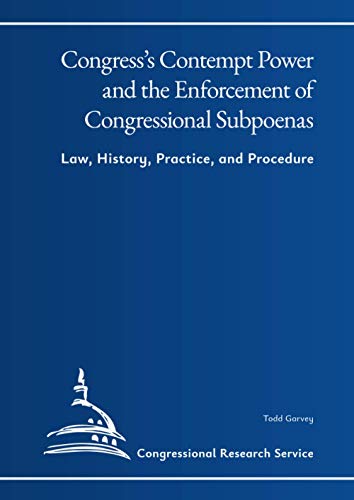
Congress’s Contempt Power and the Enforcement of Congressional Subpoenas: Law, History, Practice, and Procedure

This book provides an intriguing exploration of how contempt power applies to the enforcement of Congressional subpoenas, including administrative types. It digs deep into historical precedents and whitepapers, making it invaluable for understanding the larger context of subpoenas in the legislative process. Readers interested in the checks and balances within the U.S. government will find this book insightful, as it highlights how oversight is legally enforced and the implications that arises from non-compliance. This comprehensive guide is perfect for legal scholars, historians, and anyone involved in governmental affairs.

In summary, administrative subpoenas are vital to the legal landscape, facilitating investigations and enhancing the ability of law enforcement to function effectively. The books reviewed here offer diverse perspectives, analytical depth, and practical implications surrounding these judicial tools. Whether you’re a legal professional seeking deeper insights or a curious reader looking to understand the law, these texts provide a rich resource that is sure to inform and engage.

Recent posts

Recommended Machine Learning Books


Latest machine learning books on Amazon.com


Scroll to Top